Items in Cart
Your cart is empty
Looks like you haven't made your choice yet.
Checkout using your account
Checkout as a new customer
Creating an account has many benefits:
- See order and shipping status
- Track order history
- Check out faster

Off Road Brakes & Related
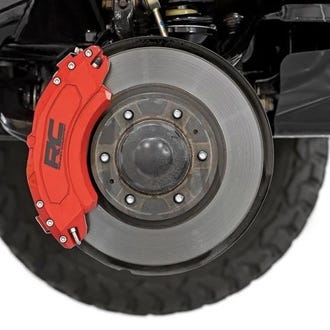
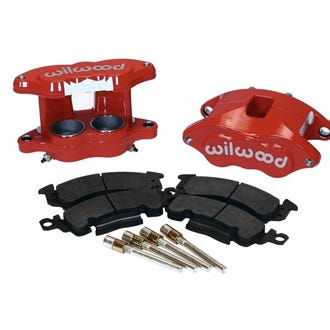
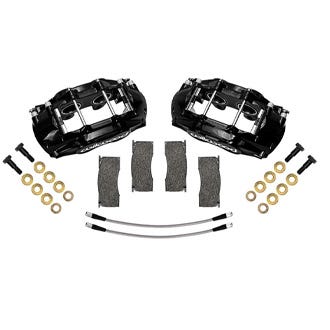
Once you add larger tires, a lift, or trail gear, your brakes are working harder than stock. Heavier wheels need more force to stop, and steep descents put sustained heat into your pads and rotors. Shop brake pads, rotors, brake lines, calipers and kits, master cylinders, and brake fluid from TeraFlex, Wilwood, PowerStop, and Skyjacker.






How to Choose Truck and Jeep Brake Pads
Your pad compound determines how your brakes feel and how long they last under different conditions. Here is how the three main types compare:
- Ceramic — Quiet, low-dust, and long-wearing. Best if you drive mostly on pavement and want clean wheels.
- Semi-metallic — Handles higher heat from towing, trail descents, and heavy loads. The go-to choice for off-road and lifted rigs.
- Organic — Softer and cheaper, but wears faster and fades sooner under heat. Fine for light-duty daily driving only.
If you run 35-inch or larger tires, go semi-metallic to manage the added rotational weight and avoid fade on long descents.
How Rotor and Drum Choice Affects Your Stopping Power
Drilled and slotted rotors dissipate heat faster than your stock solids, keeping bite consistent under heavy loads. Slotted designs also sweep gas and debris off the pad face, which helps maintain grip in mud and dust. If your truck still runs rear drums, convert to disc — it corrects the front-to-rear imbalance and makes future pad swaps straightforward.
Why You Need Extended Brake Lines After a Lift
Any lift over 2 inches can stretch your factory brake lines past their safe range, especially at full suspension droop. A cracked or separated line means total pressure loss and no brakes. Braided stainless lines from TeraFlex, Skyjacker, and Rough Country are sized for specific lift heights from 2.5 to 8 inches and resist expansion under pressure better than rubber. Replace yours any time you add or increase a lift.
When to Upgrade to a Big Brake Kit
A big brake kit gives you larger calipers and rotors for more pad contact area and heat capacity. If your JK or JL carries 200-plus pounds of steel bumpers and winch weight, your stock brakes are working beyond their design limits. Kits from Wilwood and TeraFlex bolt on directly to your existing knuckles and cut your stopping distance without custom fabrication. Look for kits that include new brackets, pads, and hardware so you are not sourcing pieces separately.
How to Diagnose a Soft Pedal: Master Cylinders and Boosters
If your pedal travels more than two-thirds of its stroke before firm resistance, or sinks to the floor entirely, your master cylinder is likely failing. Internal seals wear over time and allow fluid to bypass, reducing the pressure your calipers receive. On CJ, YJ, and TJ platforms, the original master cylinder typically reaches end of life between 100,000 and 150,000 miles — replace it along with the booster to restore firm pedal feel for steep descents. If your fluid level has dropped without a visible external leak, that confirms internal bypass and means it is time for a new cylinder.
Why Brake Fluid Maintenance Matters for Trail and Tow Use
Your brake fluid absorbs moisture over time, lowering its boiling point and risking vapor lock under hard braking. Vapor lock means your pedal goes to the floor with no stopping force — a serious problem on steep trails. Check your reservoir cap — Jeep Wranglers and most domestic trucks call for DOT 3 or DOT 4. Flush yours every two years or when moisture content exceeds 3% to keep your system reliable.
Frequently Asked Questions
What Brake Pads Are Best for Off-Road Driving?
If you wheel regularly, go with semi-metallic pads — they handle the high heat from trail braking and steep descents better than ceramic or organic compounds and give you stronger bite with less fade. They wear faster on pavement, but the tradeoff is worth it if you run oversized tires or carry heavy gear.
Do I Need Extended Brake Lines for a Lifted Truck?
Yes. Lifts over 2 inches stretch your factory lines past their safe range at full droop, risking cracks and complete pressure loss. Braided stainless lines sized for your lift height resist expansion and prevent failures. Replace them any time you install or increase a suspension lift.
What Is a Big Brake Kit and Do I Need One?
A big brake kit gives you larger calipers and rotors for more stopping force and better heat management. You need one if your rig carries steel bumpers, a winch, and armor that push your total weight well beyond stock, or if you notice fade when towing or descending steep grades.
How Often Should You Replace Truck Brake Rotors?
Most truck rotors last 50,000 to 70,000 miles under normal conditions. Off-road use, towing, and oversized tires accelerate wear significantly. Replace yours when they hit the minimum thickness stamped on the rotor hat, or sooner if you feel pulsation or vibration when braking.